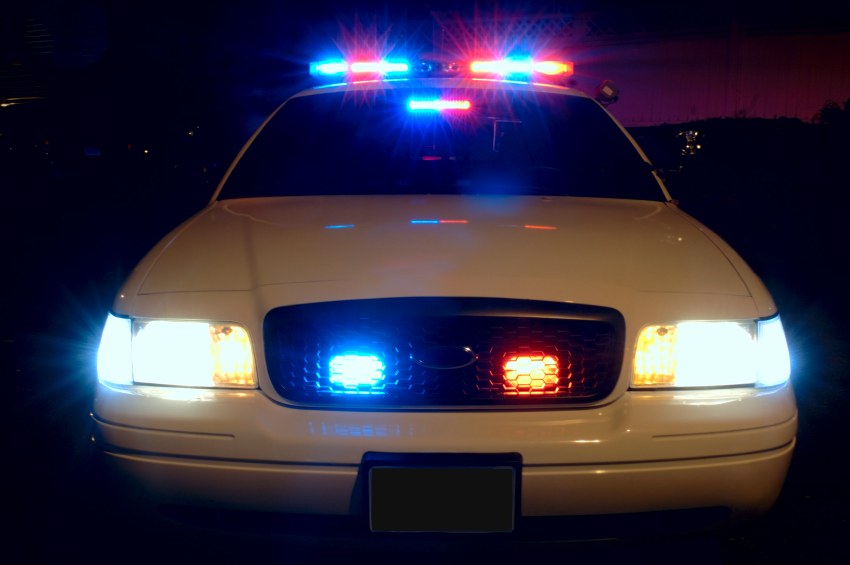
If you’ve been pulled over on suspicion of DUI, an officer will very likely ask you to perform a series of physical coordination exercises before deciding whether to arrest you. This is one of the most misunderstood parts of a DUI stop — people frequently confuse it with the chemical breath test, which operates under completely different rules with completely different consequences.
These Are Not the Same Thing as the Breath Test
Florida’s implied consent law, Florida Statute 316.1932, only covers “an approved chemical test or physical test including, but not limited to, an infrared light test of his or her breath,” along with approved blood and urine tests. Field sobriety exercises — the walk-and-turn, the one-leg stand, the eye-tracking test — aren’t mentioned in that statute at all. That’s not an oversight; it means they’re legally in a different category entirely.
The practical consequence: refusing a chemical breath, blood, or urine test after a lawful arrest triggers an automatic license suspension under Florida’s implied consent law — and, as of a law change effective October 1, 2025, a first refusal can now also be charged as a separate misdemeanor. None of that applies to field sobriety exercises. There is no license suspension, and no separate criminal charge, for declining to walk a line or stand on one leg at the roadside.
The Three Tests, and What They’re Actually Checking
Florida officers are trained to use three specific tests developed and standardized by the National Highway Traffic Safety Administration (NHTSA), and departure from the standardized procedure is itself something a defense can challenge later:
Horizontal Gaze Nystagmus (HGN) checks for an involuntary eye-jerking movement that becomes more pronounced with alcohol impairment. The officer watches each eye for three specific signs — lack of smooth pursuit, distinct jerking at maximum deviation, and jerking onset before 45 degrees — for a maximum of six possible indicators.
Walk-and-Turn asks the subject to take nine heel-to-toe steps along a straight line, turn in a specified way, and walk nine steps back while counting the steps aloud — an eight-indicator test that’s measuring balance, instruction-following, and divided attention at the same time.
One-Leg Stand asks the subject to hold one foot roughly six inches off the ground while counting aloud for 30 seconds, again primarily measuring balance and the ability to follow multi-step instructions simultaneously.
How Accurate Are They, Really?
This is worth knowing regardless of which side of a case you’re on. NHTSA’s own validation research — studies that go back decades and remain the basis for how these tests are used today — found each individual test correct at identifying a blood alcohol content above 0.10 at these rates: HGN around 77%, walk-and-turn around 68%, and one-leg stand around 65%. Used together, the combined battery reached about 82% accuracy in that same research.
Read the other direction, that means a meaningful share of sober people can fail these tests under the exact conditions the validation studies used — the one-leg stand alone was wrong roughly a third of the time. It’s also worth being precise about what “accurate” means in this context: these figures measure whether the test correctly flagged someone above a 0.10 BAC specifically, not general driving impairment and not the current Florida legal threshold of 0.08.
What Refusing Actually Does — and Doesn’t Do
Declining to perform these exercises doesn’t create automatic legal consequences the way refusing a chemical test does. It’s not a separate offense, and refusal alone isn’t legally sufficient grounds for an arrest by itself. What it can do is become something a prosecutor points to later as circumstantial evidence — though whether and how that’s actually usable in court is a point Florida law firms themselves don’t fully agree on, and it’s exactly the kind of specific, fact-dependent question worth getting a direct answer to rather than a generic one.
What field sobriety results do accomplish, regardless of whether they’re performed well or poorly, is give the officer something to point to as evidence of impairment under Florida’s “normal faculties are impaired” standard — one of the three ways Florida law defines DUI, alongside the 0.08 BAC and breath-alcohol thresholds. That’s the real stake in the moment: not a separate penalty for saying no, but what the results (or lack of them) get used to justify next.